Resources / Ford F-150 hybrid vs gas
Is the Ford F-150 hybrid worth it?
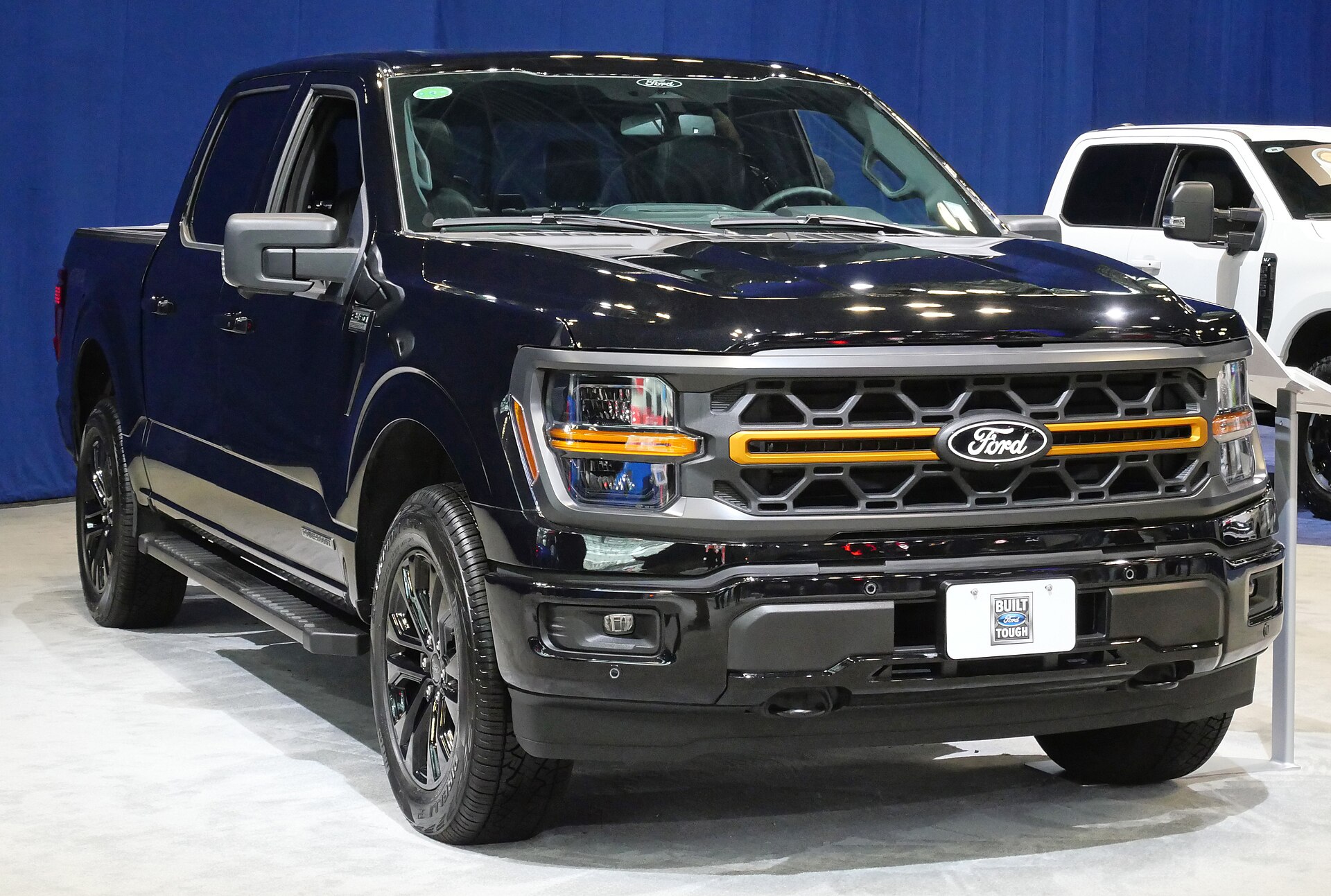
No, not for the fuel. The PowerBoost adds up to $9,635 to an XLT (Cars.com’s figure, which includes 4WD) and is rated 23 mpg combined against 20 for the 4WD 2.7L EcoBoost and 19 for the 3.5L. At the national average of $3.805 a gallon that is about $372 less gas a year against the 2.7L at 15,000 miles, so earning back the full premium takes up to 26 years, and up to 12 years against the 3.5L.
What the money buys is a different truck. Ford rates the PowerBoost at 420 hp and 570 lb-ft, more torque than any F-150 engine short of the Raptor R’s 640 lb-ft, and Pro Power Onboard (outlets in the bed and cab that run tools and appliances) can deliver 7.2 kW with it, the most Ford offers. Against that, it tows 11,600 pounds against 13,500 for the 3.5L EcoBoost, carries less (1,740 pounds of payload against 2,440), and loses value faster by iSeeCars’ figures.
Buy the hybrid if…
- You will use the generator. Ford calls the PowerBoost’s 7.2 kW the highest Pro Power Onboard output available.
- You want torque. 570 lb-ft is 70 more than the 3.5L EcoBoost and 170 more than the 2.7L.
- You tow more than the 2.7L allows (8,400 pounds) but never near the 3.5L’s 13,500. The hybrid is rated 11,600.
- You buy a King Ranch or Platinum anyway. The hybrid premium there is $5,140, the smallest on the trucks, and the payback is about 10 years.
Buy the gas version if…
- Fuel savings are the reason you are looking. Even at half of Cars.com’s premium, the XLT hybrid takes about 13 years to earn it back at 15,000 miles a year.
- You tow near the limit or haul heavy loads. The 3.5L EcoBoost is rated 13,500 pounds and 2,440 pounds of payload.
- You will sell in three years. iSeeCars has a three-year-old hybrid down 27.4% against 18.9% for the gas truck.
- You want the cheapest truck. A gas XLT starts at $44,695, and the 2.7L EcoBoost is standard.
EPA fuel economy, gas against hybrid
With 4WD, EPA rates the PowerBoost at 23 mpg combined (22 city, 24 highway), the 2.7L EcoBoost at 20 (18 city, 23 highway) and the 3.5L at 19 (17 city, 23 highway). The gain is in town: 22 mpg against 18 and 17. On the highway the hybrid is one mpg ahead, so a truck that lives on the interstate gets little from the hybrid system.
| Version | Gas, 2.7L or 3.5L EcoBoost | PowerBoost hybrid, 3.5L | Hybrid gain | EPA vehicle ids |
|---|---|---|---|---|
| 4WD | 20 combined18 city / 23 highway | 23 combined22 city / 24 highway | +3 mpg15% better combined | 50098 (gas) 50097 (hybrid) |
| 4WD | 19 combined17 city / 23 highway | 23 combined22 city / 24 highway | +4 mpg21% better combined | 50099 (gas) 50097 (hybrid) |
EPA also lists a rear-drive PowerBoost (vehicle 50447, 24 mpg combined) that we didn’t find on Ford’s site, and Cars.com’s price covers the 4WD hybrid only. Ratings are EPA’s 2026 records on fueleconomy.gov, read November 21, 2026.
What a year of gas costs
At 15,000 miles a year a 4WD 2.7L EcoBoost burns 750 gallons, the 3.5L 789 and the PowerBoost 652.
| Version | 12,000 miles at $4.00 | 15,000 miles at $4.00 | 12,000 miles at $3.805 | 15,000 miles at $3.805 |
|---|---|---|---|---|
| Gas, 2.7L or 3.5L EcoBoost4WD, 20 mpg combined | $2,400 | $3,000 | $2,283 | $2,854 |
| PowerBoost hybrid, 3.5L4WD, 23 mpg combined | $2,087 | $2,609 | $1,985 | $2,482 |
| Hybrid costs less by | $313 a year | $391 a year | $298 a year | $372 a year |
| Gas, 2.7L or 3.5L EcoBoost4WD, 19 mpg combined | $2,526 | $3,158 | $2,403 | $3,004 |
| PowerBoost hybrid, 3.5L4WD, 23 mpg combined | $2,087 | $2,609 | $1,985 | $2,482 |
| Hybrid costs less by | $439 a year | $549 a year | $418 a year | $522 a year |
Gallons are miles divided by EPA’s combined rating. EPA prices regular gasoline at $4.00 a gallon; the U.S. average was $3.805 for the week of November 16, 2026, from the Energy Information Administration. EPA’s own label figure assumes 15,000 miles a year.
How many years until the hybrid pays for itself?
Dividing the premium ceiling by the yearly gas savings gives 24.6 to 32.4 years against the 2.7L, 11.7 to 15.3 years against the 3.5L on an XLT and 9.4 to 12.3 years on a King Ranch or Platinum. All three are upper limits, because the real premium on a 4x4 is lower.
| Pair | Hybrid premium | 12,000 miles at $4.00 | 15,000 miles at $4.00 | 12,000 miles at $3.805 | 15,000 miles at $3.805 |
|---|---|---|---|---|---|
| XLT: PowerBoost against 2.7L EcoBoost | up to $9,635 | up to 30.8 years | up to 24.6 years | up to 32.4 years | up to 25.9 years |
| XLT: PowerBoost against 3.5L EcoBoost | up to $6,415 | up to 14.6 years | up to 11.7 years | up to 15.3 years | up to 12.3 years |
| King Ranch or Platinum: PowerBoost against 3.5L EcoBoost | up to $5,140 | up to 11.7 years | up to 9.4 years | up to 12.3 years | up to 9.8 years |
XLT: PowerBoost against 2.7L EcoBoost
Years of fuel savings to earn back at most $9,635 (4WD). Bars share one scale.
XLT: PowerBoost against 3.5L EcoBoost
Years of fuel savings to earn back at most $6,415 (4WD). Bars share one scale.
King Ranch or Platinum: PowerBoost against 3.5L EcoBoost
Years of fuel savings to earn back at most $5,140 (4WD). Bars share one scale.
Halve the XLT premium to $4,818, a deliberately generous guess, and the payback against the 2.7L is still about 13 years at 15,000 miles and $3.805 gas.
What else changes
The PowerBoost sits between the two gas engines on towing and above both on torque.
| Gas, 2.7L or 3.5L EcoBoost | PowerBoost hybrid, 3.5L | |
|---|---|---|
| Power | 2.7L: 325 hp. 3.5L: 400 hp | 420 hp (Ford’s XLT page; Cars.com prints 430) |
| Torque | 2.7L: 400 lb-ft. 3.5L: 500 lb-ft | 570 lb-ft |
| Maximum towing | 2.7L: 8,400 pounds. 3.5L: 13,500 pounds | 11,600 pounds |
| Maximum payload | 2.7L: 1,775 pounds. 3.5L: 2,440 pounds | 1,740 pounds |
| Pro Power Onboard generator | Available at a lower output than the hybrid’s | Up to 7.2 kW, which Ford calls the highest it offers |
| Drive | 2WD or 4WD; 4WD is a separate charge on an XLT | 4WD included in the package (Cars.com) |
| Where you can get it | 2.7L standard on XL, STX and XLT. 3.5L standard on Lariat, King Ranch, Platinum and Tremor, a $3,220 option on an XLT | Option on STX, XLT, Lariat, King Ranch and Platinum |
| Hybrid battery warranty | Not applicable | 8 years or 100,000 miles, per CarGurus and a Ford dealer’s FAQ; Ford’s own page wouldn’t load for us |
Tow and payload figures are maximums for the best-equipped truck with each engine, so a typical XLT will rate lower. Reliability is the other worry. Consumer Reports ranked the PowerBoost among its least reliable vehicles in 2022 and 2023, and it now predicts about average reliability for the 2026 (from the F-150 price guide).
Do this month’s incentives favor one version?
Ford’s offers are listed by trim, and none names the engine. The $4,500 cash applies to a 2026 XLT (plus the STX and Lariat in the New York area) through November 30, and the 0% and 1.9% financing deals cover every 2026 trim except the Raptor. As far as Ford’s page shows, a hybrid XLT qualifies the same way as a gas one, so no incentive offsets the hybrid’s premium. Ask the dealer to confirm in writing. Offers are from the F-150 price guide, read on Ford’s site on November 15, 2026.
Resale: does the hybrid hold its value?
iSeeCars figures the standard F-150 loses 18.9% of its value in three years and 38.6% in five, and the hybrid 27.4% and 44.0%. The hybrid’s faster depreciation comes on top of its premium, so resale doesn’t shorten the payback. The F-150 price guide makes the same point.
What owners on Reddit report about real-world mpg
Owners say the PowerBoost beats the V8s on mileage, though speed and towing pull every F-150 down. We counted 160 opinions about the F-150’s fuel economy in 397 Reddit threads about the car, posted from January 2025 to November 2026: 110 positive, 35 negative and 15 mixed. That is a net score of +47 on the same −100 to +100 scale as the F-150 price guide, and it covers every version of the car, not only the hybrid.
What owners praise
- 2.7 EcoBoost often reaches low to mid 20s mpg on the highway
- PowerBoost hybrid returns clearly better mileage than the V8 engines
- F-150 gets better mileage than a comparable Super Duty
What owners complain about
- Highway mpg falls into the teens at 75 mph or when towing
- Owners of the 5.0 and 3.5 report mid-teens mpg in mixed driving
- Fuel cost is high for light-duty use compared with a car or crossover
Our own reading of public Reddit comments from the Arctic Shift archive, collected November 18, 2026: coded by AI to a fixed rubric and checked by a second coder on a sample. Complaints are what owners report, not confirmed defects. Method and the full Reddit section are on the F-150 price guide.
Pick how much help you want

Steer Me Right
Best if you know the car you want.
$395 one-time
- One model, with any trims, colors and packages
- We contact dozens of dealers that have it in stock
- We negotiate the price and fees

Steer Me Right Pro
Best if you’re torn between a few cars.
$695 one-time
- We present offers on up to three models
- We handle the paperwork remotely where we can, so you just pick up your car
- Shipping help in some cases
You can upgrade to Steer Me Right Pro later by paying the $300 difference. The fee doesn’t cover the car, taxes or registration. Refund policy
Common questions
How much does the F-150 PowerBoost cost?
Cars.com lists the PowerBoost as an extra $9,145 on an STX, $9,635 on an XLT, $7,810 on a Lariat and $5,140 on a King Ranch or Platinum, with 4WD included. Ford doesn’t offer it on the XL, Tremor or Raptor. Confirm the current charge in Ford’s configurator.
How much better is the PowerBoost’s mpg?
With 4WD, EPA rates it 23 mpg combined against 20 for the 2.7L EcoBoost and 19 for the 3.5L and the 5.0L V8. That is about 100 to 140 fewer gallons a year at 15,000 miles.
Does the F-150 hybrid tow less than the gas truck?
Than the 3.5L EcoBoost, yes: 11,600 pounds against 13,500. Than the 2.7L, no: that engine is rated 8,400 pounds. Ratings are maximums for a well-equipped truck.
What is Pro Power Onboard?
Ford’s built-in generator: outlets in the bed and cab that run tools and appliances. Ford says the PowerBoost can deliver 7.2 kW, the highest output available.
Can you negotiate a Ford F-150 for me?
Yes. Steer Me Right charges a flat $395 for one model or $695 for up to three. We find it in dealer stock, get written out-the-door offers and negotiate for a price below MSRP. We can’t promise a specific discount: the market for a given car sets what a dealer will do.
Do dealers pay you?
No. Dealers and lenders pay us nothing. You pay the flat fee, and you’re the only one we work for.
Sources and updates
Written by Mason, Steer Me Right’s founder and lead advisor. Prices, ratings and gas prices were checked on November 21, 2026 and change often, so confirm prices with the dealer before you sign. The annual fuel costs and break-even years are our estimates from the ratings and prices below, not a promise. If something is out of date or wrong, email hello@steermeright.com and we will correct it.
All 16 sources
- Ford: 2026 F-150 models: trims, prices, engines and which trims offer the hybrid
- Ford: 2026 F-150 XLT: PowerBoost power and generator output
- Cars.com: how much is the 2026 Ford F-150?: hybrid and engine option prices, towing and payload
- FuelEconomy.gov: 2026 F-150 4WD, 2.7L (vehicle 50098): EPA ratings, 2.7L, 4WD
- FuelEconomy.gov: 2026 F-150 4WD, 3.5L (vehicle 50099): EPA ratings, 3.5L, 4WD
- FuelEconomy.gov: 2026 F-150 4WD HEV (vehicle 50097): EPA ratings, PowerBoost, 4WD
- FuelEconomy.gov: 2026 F-150 2WD HEV (vehicle 50447): EPA ratings, PowerBoost, rear-drive
- iSeeCars: Ford F-150 resale value: three- and five-year depreciation, gas and hybrid
- Ford: 2026 F-150 incentives and offers: cash and finance offers, from the F-150 price guide
- CarGurus: are hybrid Ford F-150s more reliable?: hybrid battery warranty, seen only in a search result
- Ford Authority: Consumer Reports on the F-150 hybrid: hybrid reliability history, from the F-150 price guide
- Consumer Reports: 2026 Ford F-150 reliability: predicted reliability, from the F-150 price guide
- FuelEconomy.gov: fuel prices used in EPA calculations: the price EPA uses for its fuel-cost figures, read from the fueleconomy.gov web service
- FuelEconomy.gov: learn more about the gasoline fuel economy label: how EPA works out annual fuel cost and combined mpg
- U.S. Energy Information Administration: gasoline and diesel fuel update: the current national average price of regular gasoline, from the weekly survey
- Arctic Shift: Reddit archive: the public Reddit archive the coded comments came from
Related: Ford F-150 price guide, F-150 vs Silverado, F-150 vs Tundra, F-150 vs Sierra, F-150 vs Ram 1500, new car buying service and car negotiation service.
Photo credits
- Main photo: Kevauto, CC BY-SA 4.0
